
International tax research: how to determine which authority governs a cross-border position

Which country’s tax rules apply here?
That’s a question your team will likely have when working on a cross-border assignment. Unfortunately, the answer is rarely straightforward.
International tax research requires you to reconcile rules across multiple jurisdictions, including domestic legislation, treaty provisions, administrative guidance, and international frameworks. The challenge is determining which authority governs a specific position.
A relevant-looking answer is not enough. The conclusion must be supported by authority that can be reviewed, verified, and explained.
This article explains:
- How the four authority systems’—US domestic law, bilateral tax treaties, foreign domestic law, and The Organisation for Economic Co-operation and Development (OECD)—guidance shape international tax research
- How practitioners determine which rules govern a cross-border position
- How AI-powered tax research tools can help locate and verify relevant sources more efficiently.
What is international tax research—and why is it harder than domestic tax research?
International tax research is the process of determining which tax rules apply to a cross-border transaction when multiple jurisdictions are involved and supporting the conclusion with the relevant authorities.
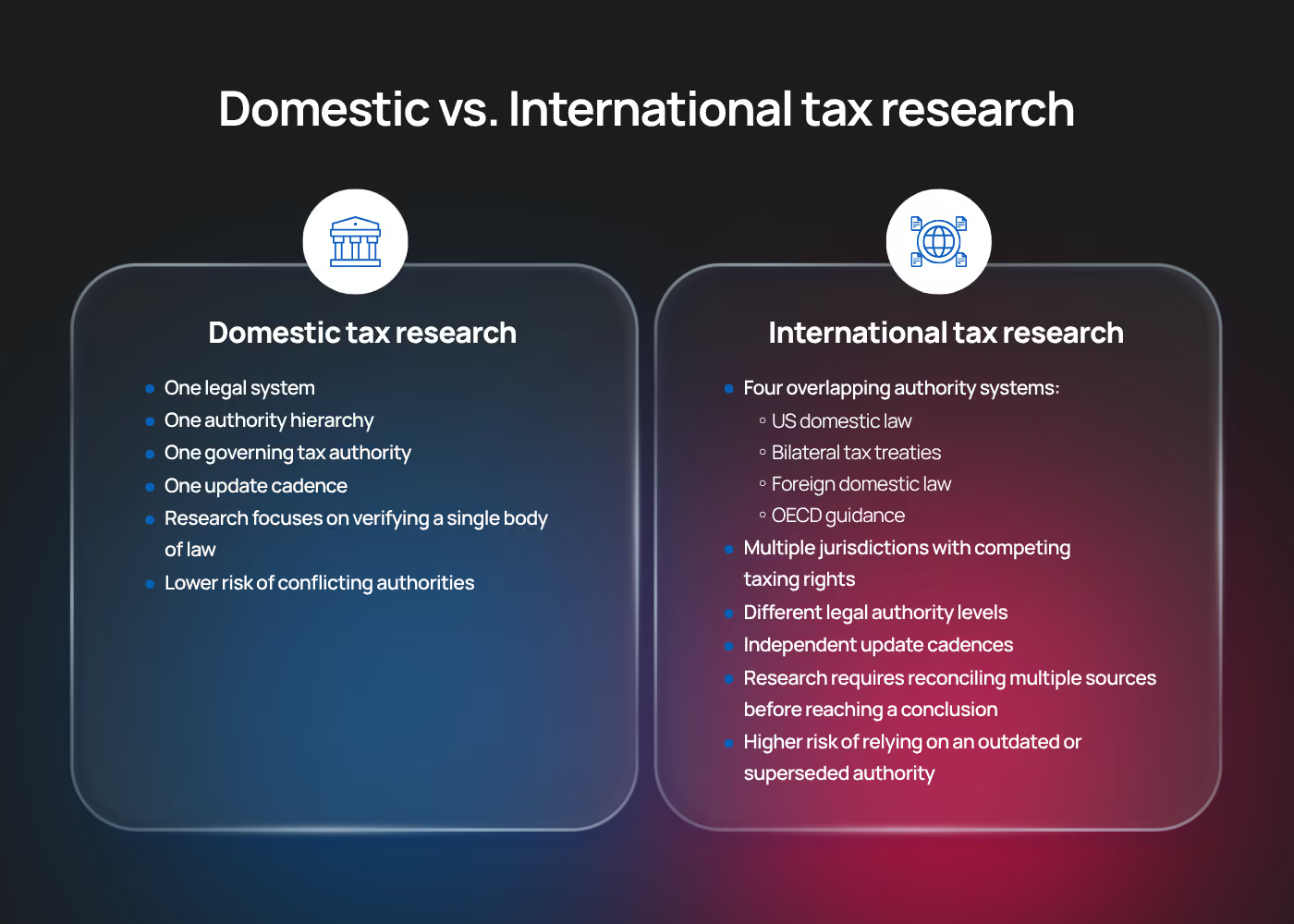
Unlike domestic tax research—which usually focuses on one country’s tax system—international tax research requires you to evaluate multiple legal systems, including domestic laws, tax treaties, foreign legislation, and international guidance.
Domestic tax research follows a single authority structure. You identify the relevant statutes, regulations, administrative guidance, or case law and determine how those sources apply to the specific issue.
International tax research differs because a cross-border transaction may involve more than one country’s tax rules, requiring you to evaluate how different authorities interact.
An international tax issue can arise from either an outbound or inbound transaction, depending on the direction of the cross-border activity.
Outbound international tax issues
An outbound tax issue occurs when a US taxpayer or company expands activities, earns income, or makes payments in a foreign country.
For example, let’s say a company based in the US is investing in a foreign subsidiary, or receiving income from a company branch overseas. The tax issue here may involve determining how the US domestic tax rules apply alongside the foreign country’s tax rules and whether a tax treaty modifies the result.
The research question may involve determining how the home country taxes the foreign activity and whether the foreign jurisdiction also has taxing rights over the same income.
Inbound international tax issues
An inbound tax issue occurs when a foreign taxpayer or foreign business conducts activities, earns income, or makes investments in the US.
For example, a foreign company selling products or conducting business operations in the US may need to determine whether and how US tax rules apply to that activity. In this case, the analysis may require reviewing US domestic tax rules, applicable treaty provisions, and the foreign country’s treatment of the same transaction.
In both outbound and inbound situations, you must identify the relevant jurisdictions, determine which authorities apply, evaluate their legal weight, confirm that the sources are current, and document how the conclusion was reached.
You can see how domestic research compares to international tax research in more detail below:
Four authority systems govern international tax research. We’ll discuss each in the next section.
The four authority source systems that shape international tax research
Four different source systems govern international tax research:
- US domestic law
- Bilateral tax treaties
- Foreign domestic law
- OECD instruments
Some of these source systems create binding legal obligations, while others provide guidance that influences how countries develop and apply their rules.
Understanding the differences is an important step to producing defensible international tax advice.
1. US domestic law
For a US company doing business across borders, the first place to look when conducting tax research is domestic law.
This is the starting point of your analysis. It explains how the US taxes international activities, including foreign subsidiaries, overseas income, and cross-border transactions.
The primary sources of US tax law include:
- Internal Revenue Code provisions
- Treasury regulations
- IRS guidance
- Court decisions
These sources work together, but they do not have the same level of authority.
The Internal Revenue Code (IRC) is the legislative foundation passed by Congress and the primary starting point for any tax analysis.
Treasury regulations represent the highest level of administrative authority. Issued to interpret and implement the IRC, final regulations carry the force of law and set binding operational rules for taxpayers and practitioners.
IRS administrative guidance is official administrative interpretations. Revenue Rulings and Revenue Procedures provide precedent for all taxpayers, while informal guidance (e.g. PLRs, FAQs) cannot be cited as controlling authority.
Court decisions become important when the meaning or application of a tax provision is disputed. Courts interpret statutes, regulations, and other authorities to determine how tax rules apply to specific facts, which can influence how similar issues are analyzed in future cases.
So always evaluate a source's substance, authority, relevance, and currency.
Tax rules and terminology change over time, so a reliable research process requires confirming that the conclusion is based on the most current and authoritative information available.
2. Bilateral tax treaties
Bilateral tax treaties are agreements between two countries that coordinate how cross-border income is taxed.
They help allocate taxing rights between jurisdictions and provide mechanisms to reduce or eliminate double taxation when both countries may seek to tax the same income.
Treaties commonly address issues such as:
- Residency: determining which country treats an individual or company as a tax resident when both jurisdictions may claim taxing rights. Treaty residency provisions help resolve cases where domestic rules in both countries could apply.
- Treaty benefits: establishing whether a taxpayer qualifies for protections or reduced tax rates available under the agreement. These benefits generally depend on meeting the treaty’s requirements and applying the relevant provisions correctly.
- Withholding taxes: limiting the amount of tax a country may impose on certain cross-border payments, including dividends, interest, and royalties, where treaty provisions apply.
- Permanent establishment: defining when a business has sufficient presence in another country for that country to tax the business profits connected with that activity.
As an international tax researcher, a treaty is an important source of authority, but the analysis doesn’t end with locating the treaty text. Researchers must first understand the relevant domestic tax rules in each jurisdiction, then determine whether the treaty modifies, limits, or allocates those taxing rights.
The OECD Model Tax Convention and its commentary provide a framework for treaty negotiations and interpretation.
However, the bilateral treaty agreed between two countries remains the relevant legal instrument for the specific transaction being analyzed.
So verify the current treaty text, including any protocols, amendments, or other modifications that may affect its application.
In some cases, treaty modifications introduced through the Base Erosion and Profit Shifting (BEPS) Multilateral Instrument (MLI) may also affect how a bilateral tax treaty applies. The MLI allows participating countries to incorporate certain BEPS measures into covered tax treaties without renegotiating each treaty individually.
3. Foreign domestic law
International tax research often requires you to analyze the domestic tax rules of another jurisdiction.
While a tax treaty may allocate or limit taxing rights between countries, the foreign jurisdiction’s own laws determine how those treaty provisions operate in practice.
So you need to understand tax rules in jurisdictions where you don’t regularly practice.
Foreign domestic law research can involve challenges such as:
- Different legal systems and tax frameworks.
- Different reporting obligations and compliance requirements.
- Different legislative and administrative update cycles.
- Limited availability or accessibility of foreign-language sources.
Without a reliable and current foreign tax authority, you may struggle to determine how another jurisdiction applies its rules and how those rules interact with your broader cross-border analysis.
4. OECD instruments
The OECD develops international tax frameworks, recommendations, and guidance that help countries address tax challenges arising from cross-border business activities.
These materials influence how jurisdictions design, interpret, and implement international tax rules.
Examples of OECD guidance include:
- OECD Transfer Pricing Guidelines: these provide standards for applying the arm’s length principle, which requires transactions between related companies in a multinational group to be priced as if the companies were independent parties. The guidelines help determine whether cross-border transactions between related entities reflect market conditions.
- BEPS guidance: the BEPS framework addresses situations where differences between countries’ tax rules allow multinational businesses to reduce their overall tax liability by shifting profits away from the jurisdictions where economic activities take place.
- Pillar Two Model Rules: these provide a framework developed by the OECD for a global minimum tax system designed to ensure that large multinational enterprises pay a minimum level of tax on their profits. The rules set out a coordinated approach that countries can adopt through their own domestic legislation, meaning the actual application depends on how each jurisdiction implements the framework.
OECD materials don’t automatically replace domestic tax law or treaty provisions.
Countries determine how these frameworks apply through their own legislation, regulations, and administrative processes.
So it’s important to determine whether the relevant jurisdiction has adopted an OECD framework and how it affects the specific transaction being analyzed.
The four authority systems at a glance
The table below provides an at-a-glance overview of the four authority systems used in international tax research, showing what each source governs, how researchers should evaluate updates, and the common mistakes that can affect a tax conclusion.
It’s important to note that the four authority systems don’t operate separately. Domestic law, treaties, foreign legislation, and international guidance may interact and require careful evaluation.
This is why international tax research requires practitioners to verify not only what a source says, but also its legal weight, relevance, and current application.
How tax practitioners determine which authority governs a cross-border tax position
The four authority systems provide the framework for international tax research, but the practical challenge is determining how they apply to a specific transaction.
In a specific international tax research issue, you first identify the facts, determine which jurisdictions are involved, and then evaluate the authorities that may affect the tax outcome.
A practical research process follows these steps:
Step 1: Define the transaction and identify the relevant jurisdictions
Before reviewing tax rules, establish the facts that determine which countries may have taxing rights.
Consider:
- Where the taxpayer is resident
- Where income is generated
- Where business activities occur
- Which entities are involved
- Whether payments, investments, or operations cross borders
This step determines which domestic laws, treaties, and international frameworks may be relevant.
Step 2: Establish the starting position under domestic law
Once you identify the relevant jurisdictions, determine how each country treats the transaction under its own tax rules.
Domestic law provides the starting point because you need to understand each country’s position before assessing whether international rules change the result.
For example, this may involve reviewing:
- Statutory provisions
- Regulations
- Administrative guidance
- Relevant court decisions
Step 3: Determine whether international rules modify that position
After establishing the domestic-law position, evaluate whether other authorities affect the outcome.
This may involve asking:
- Does a bilateral tax treaty apply?
- Does the treaty allocate or limit taxing rights?
- Are there protocols, amendments, or other modifications that affect the analysis?
- Has international guidance been incorporated into domestic rules?
The goal is to determine how the different authorities interact, not to analyze each source separately.
Step 4: Confirm the authority that supports the conclusion
Before reaching a final position, verify that the supporting authority is:
- Current
- Applicable to the relevant jurisdiction
- Effective for the relevant period
- Strong enough to support the conclusion
How can AI-powered tax research simplify cross-border research?
Ask a tax practitioner about the near-term impact of generative AI, and the conversation will likely start with research. For most teams, research is the first—and most practical—area where AI delivers measurable value. That’s why discussions about the future of generative AI in tax often begin with how AI can streamline research workflows before expanding into compliance, planning, and client advisory use cases.
International tax research requires you to connect multiple sources and determine which authority supports the final position. Generative AI tax research tools shorten that path. They surface relevant materials, organize findings with citations attached, and leave you with a clearer, more defensible route to a conclusion.
Here’s how AI‑native solutions support each stage of the workflow.
1. Identify relevant authorities faster
International tax research often requires reviewing multiple sources across different jurisdictions. AI-powered tools can help you search complex tax questions using natural language and identify potentially relevant authorities, including legislation, guidance, treaties, and other tax materials.
2. Organize and analyze research findings
Cross-border tax research involves large amounts of information from different jurisdictions.
AI can organize your findings, compare relevant sources, and identify relationships between different tax rules.
So with an AI-native tool, you spend more time analyzing how the authorities apply to the specific facts instead of manually sorting through information.
3. Support communication of tax conclusions
After completing the research and verifying the relevant authorities, AI can organize your conclusions and recommendations into a clear and concise format.
Examples include:
- Summarizing research findings
- Preparing draft explanations
- Simplifying technical analysis for clients
AI can support the research workflow, but the final tax position depends on professional judgment and review.
How Blue J uses IBFD to answer cross-border questions

As tax professionals continue to manage increasing regulatory changes and expanding research demands, the future of tax research is moving toward solutions that combine authoritative content with faster, more efficient workflows.
This is where Blue J helps.
Through its exclusive IBFD partnership, Blue J gives you access to country-level tax law, treaty information, and cross-border commentaries.
It combines primary tax authorities with expert tax commentary from trusted sources such as IBFD, a global provider of international tax information, and Tax Notes, a provider of tax news, analysis, and commentary.
A dedicated Legal Research Team supports this content by maintaining and curating the platform’s research library.
The result includes citations you can verify. So you review the supporting sources, understand the reasoning behind an answer, and apply your own professional judgment.
Explore the tax research buying guide to learn what to consider when choosing a modern tax research solution.
Frequently asked questions about international tax research
Can I still rely on the text of a bilateral tax treaty on its own?
Not always. If a treaty is a covered tax agreement under the BEPS Multilateral Instrument, you may need to consider both the original treaty text and the applicable MLI modifications.
The MLI changes how certain treaty provisions apply without rewriting every treaty individually. OECD guidance on synthesized texts can improve readability, but it doesn’t replace the authentic treaty and MLI documents as legal sources.
Can an AI tax research platform be relied on for cross-border work?
AI-powered tax research tools can help you identify relevant sources, organize complex information, and trace answers back to supporting authorities. These are important factors to consider when evaluating an AI tax research tool.
However, you must verify that the sources are current, applicable to the relevant jurisdiction, and strong enough to support your conclusion.
How do I verify the domestic tax law of a jurisdiction I do not practice in?
Start by using reliable country-level tax sources, including official legislation, tax authority guidance, and other authoritative materials from that jurisdiction.
You should confirm that the information is current, applies to the relevant facts, and reflects how the jurisdiction actually implements its tax rules.
Always remember that the goal is not only to find the rule, but to confirm that the source is authoritative and supports the conclusion being reached.
What sources should be reviewed when researching an international tax issue?
Review the domestic tax law in your base country relating to the tax issue, bilateral tax treaties, foreign domestic law, and OECD guidance.
The relevant sources depend on the transaction's facts, the jurisdictions involved, and the type of tax issue being analyzed. Evaluate each source based on its legal weight and relevance.

Stay up to date







.webp)
