

Is your team still bookmarking six different tax websites to answer one question? As a tax manager or research lead, completing tax research shouldn't mean stitching together primary sources, editorial commentary, and a search bar that doesn't understand plain English.
Today we have new tools and websites to make doing tax research less of a daunting task. Many of these new tools can now read a question the way a colleague would and hand back a sourced answer in seconds.
In this article, we’ll list some of the best tax research tools in 2026, so you can spend less time hunting for tax answers and more time advising. We also included a list of the major tax research websites you can turn to when doing your next research.
How we built this list
Before we get started, here’s a quick run-through of how we built this list.
The list is divided into two main categories:
- Tax research online tools and platforms: think of tax research platforms that bring primary authority, expert commentary, research features, and more in one place. In this category, we highlighted legacy tax research tools that tax professionals have relied on for many years. However, legacy tools are known to be difficult to use and time-consuming; this explains why the adoption of these tools is declining. In our latest research, nearly 60% of firms are now using AI for tax research. With more firms using AI for tax research, this category won’t be complete without adding some of the best AI-powered online tools for tax practitioners too.
- Tax research websites: the second category includes websites tax professionals can turn to for tax law, guidance, analysis, and updates. We added primary sources from official tax authorities in the US, UK, Canada, and internationally. We also added secondary websites that provide expert analysis and reporting on tax developments, and any other useful tax research resources that don’t fit neatly into the tool or platform category.
An overview of top tax research tools and platforms
In this section, we highlight some of the top tax research tools and platforms to consider, and what each one offers.
Note: All vendor information is true as of August 2026 and should be verified independently.
1. Blue J
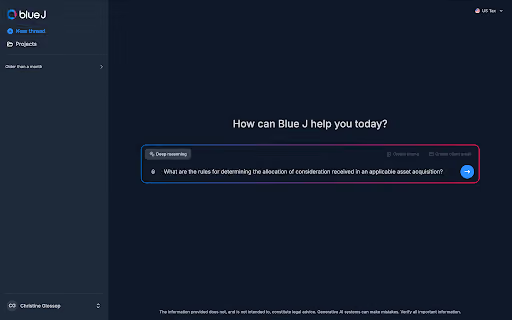
Best for: all tax professionals and research teams looking for fast, defensible answers with verifiable sources.
Blue J is an AI-powered tax research solution built specifically for tax.
Instead of building Boolean searches, chasing references, and piecing together an answer manually, Blue J lets you do conversational tax research by asking your tax question in plain language. Blue J will then deliver a defensible answer in seconds with sources you can review and verify.
At its core, Blue J uses vertical AI trained on curated tax content and maintained by a dedicated Legal Research Team. It sources content from primary authorities, Tax Notes, and the International Bureau of Fiscal Documentation (IBFD). Tax Notes is a reputable portfolio of publications that publishes tax news, analysis, and expert commentary by Tax Analysts, a nonprofit tax publisher founded in 1970. And if you work on international or cross-border tax issues, resources from the IBFD give you the most comprehensive and up-to-date coverage of worldwide tax information.
Using a solution like Blue J means less time spent searching for information and more time spent reviewing the analysis, applying your professional judgment, and doing advisory work. Since it was founded in 2015, Blue J has been used by thousands of organizations, including Big Four firms and Fortune 100 companies, and has answered more than 10 million tax questions to date. On top of that, the solution also has an adoption rate of 75% for monthly active users.
What else can you use Blue J for?
Beyond answering tax questions, here are some other ways Blue J can support several parts of your tax research workflow:
- Go deeper into a specific source: use Ask a Document to question, summarize, or analyze a case, ruling, regulation, or other lengthy source.
- Analyze client-specific documents: upload returns, operating agreements, notices, and other client documents. After which you can research how the relevant tax rules apply to a specific client based on the documents provided.
- Validate your analysis: double-check a filing position, confirm an uncertain issue, or refresh your understanding of an unfamiliar topic, and review the authority behind the answer.
- Turn research into tax writing: use Blue J for tax writing, from drafting emails, tax memos, presentations, documentation, and responses to IRS notices.
- Support compliance work: research filing positions and resolve questions that come up during compliance work.
How does Blue J help you verify sources?
Every response Blue J delivers includes inline citations and a complete source list for you to review. By clicking “View More Sources” below the answers to your tax questions, Blue J will surface additional cases and guidance for you to review.
2. Checkpoint with CoCounsel Tax
Best for: accounting firms and tax departments that want to combine authoritative research, firm documents, drafting, and repeatable workflows in one AI workspace.
Checkpoint is Thomson Reuters' traditional tax and accounting research library, while CoCounsel Tax is their AI tax assistant and workflow platform. Instead of searching through a research database yourself, CoCounsel Tax lets you search in plain language, synthesizes relevant Checkpoint material, and gives you an answer back with citations to the supporting sources.
Key features
- AI-assisted research: lets you ask tax questions in everyday language and receive synthesized answers from trusted sources.
- Citation-backed answers: the AI-generated responses include citations to the Checkpoint, IRS code, and government web sources used, allowing you to review and validate your research answers thoroughly.
- Conversational research interface: interact with the Checkpoint database through a simple chat-style interface, making it possible to phrase questions naturally rather than relying on precisely constructed searches.
- Templates, workspaces, and knowledge base: create reusable templates for common workflows, collaborate through Workspaces, and centralize firm information in a Knowledge Base that can be accessed throughout CoCounsel.
- Create client-ready deliverables: generate professional client deliverables with citations.
The features you can access depend on the CoCounsel Tax plan you choose. For instance, Tax Research focuses on citation-backed Checkpoint research for complex and multistate issues, while Tax Essentials is geared toward everyday tax questions and document analysis.
3. CCH AnswerConnect
Best for: tax professionals, accounting and audit researchers, and corporations.
CCH AnswerConnect Tax is an AI-powered tax research platform designed by Wolters Kluwer to help tax professionals research US federal and multistate tax issues. It combines Expert AI with human-reviewed CCH analysis and primary sources—including the Internal Revenue Code, regulations, rulings, and cases.
The CCH AnswerConnect interface looks more like a traditional search engine interface and not a chat interface. It has a search bar where you can look up your tax-related issues, with a search button in the far-right corner.
Key features
- Expert AI-powered research: uses generative AI grounded in expert-vetted CCH research and current tax guidance to help you find answers faster.
- Client document analysis: lets you upload tax returns, agreements, and other client files and ask questions about the facts contained in them.
- Research tools and current guidance: provides expert-backed insights designed to help you account for recent tax changes and get a more complete view of an issue.
- CCH software integrations: integrates with CCH Axcess Tax, CCH ProSystem fx Tax, ATX, and TaxWise, making it easy to connect research with tax preparation and workflow tools.
The standard CCH AnswerConnect Tax package focuses on US federal and multistate tax research. This means that if your firm needs accounting, audit, international, or specialty research, you would need to consider a higher subscription tier.
4. Bloomberg Tax
Best for: corporate tax departments and larger advisory firms working on complex federal, state, international, or transactional matters.
Bloomberg Tax Research gives tax professionals timely tax insights and research tools powered by authoritative sources. It brings together primary sources, expert analysis, news, and practical tools across core tax topics to help practitioners deepen their expertise and make decisions with confidence.
Key features
- Bloomberg Tax Answers: delivers AI-generated summaries with each search, helping you get precise answers to tax questions with supporting primary sources and expert analysis.
- Tax Management Portfolios: written by leading tax practitioners, these Portfolios cover virtually every tax topic with deep analysis, real-world examples, working papers, and expert perspectives to support informed decisions.
- Chart Builders: let you quickly create charts covering areas such as apportionment, filing requirements, penalties, VAT, and withholding tax.
- Treaty Comparison Tool: lets you compare articles across multiple treaty partners in one centralized location.
- Compliance Tracker: automates the tracking and gathering of tax forms, filings, and due dates across multiple entities and jurisdictions.
- Primary source and practice-area coverage: brings together tools, news, analysis, and primary sources across federal, state, international tax, financial accounting, and payroll in one centralized location.
- AI Assistant: AI chat-based research tool that provides accurate, cited answers to complex tax questions in seconds.
- Tax news, trackers, and alerts: keeps you informed when regulatory and legal changes affect the tax code.
If you’re a sole practitioner or small CPA firm, Bloomberg Tax’s cost might be harder to justify, especially when the platform is not used frequently. Bloomberg Tax’s small-firm offering starts at $2,200, so firms with occasional or narrowly focused research needs may want to consider whether they will use the platform enough to justify the investment.
5. Tolley+ with Protégé
Best for: CPA firms, corporate tax departments, tax attorneys, and government teams.
Tolley+ with Protégé is an AI-powered tax research platform that combines authoritative tax content with AI-enhanced research capabilities. It helps tax professionals research complex issues, analyze tax law across jurisdictions, and find relevant guidance using conversational AI and integrated research tools.
Key features:
- Protégé AI assistance: lets you ask tax questions in natural language and receive answers grounded in authoritative tax content, reducing the time spent manually searching and synthesizing information.
- Comprehensive tax content: provides access to trusted federal, state, local, and international tax sources, as well as accounting and estate-tax content, in one research platform.
- Federal Code Reporter: provides IRS guidance, including Private Letter Rulings, Technical Advice Memoranda, and Revenue Rulings, organized by Internal Revenue Code subsection.
- Statutory Analysis Checklists: break down Internal Revenue Code provisions into actionable steps to help practitioners interpret and apply tax law.
- Comprehensive Tax Guides: provide in-depth analysis across federal income tax, estate and gift tax, international tax, and federal tax procedure, supported by examples, practice insights, and drafting checklists.
- Research and comparison tools: include tools such as Code Compare, Search Trees, and Search Term Maps to help practitioners compare tax authorities, refine searches, and navigate complex research efficiently.
Pricing and plans vary based on the size of your firm, the features you want, and the scope of content access you need.
6. TaxGPT
Best for: tax professionals—including CPAs, enrolled agents, tax attorneys, tax preparers, and accounting and tax firms.
TaxGPT is an AI-powered platform built for tax professionals that brings tax research, writing, document analysis, multi-jurisdictional research, client intelligence, and tax return review into one place. Instead of digging through sources manually, this platform lets you simply ask complex tax questions in plain language and get clear, structured answers backed by citations to authoritative tax sources.
Key features
- AI Tax Research: ask tax questions in plain language and get answers backed by real sources like the Internal Revenue Code, Treasury Regulations, court cases, revenue rulings, and other official guidance.
- Tax Document Analysis: upload tax documents and get answers tailored to the client’s specific facts.
- TaxGPT Writer: turn your research into polished drafts—like client emails, tax memos, IRS or CRA notice responses, engagement letters, opinion letters, and other tax correspondence.
- TaxGPT Matrix: take a single tax question and run it across multiple jurisdictions at once, then view the results in a clean, exportable comparison table.
- Client Intelligence: an AI-powered client profile that brings together tax history, entity structure, prior-year positions, and past research threads.
- Agent Andrew: reviews prepared individual and business tax returns and generates a report highlighting potential errors, audit risks, and missed tax-saving opportunities.
Some of TaxGPT’s more advanced automation capabilities are available only on higher-tier usage-based plans.
An overview of top tax research websites
Here’s a quick overview of some of the top tax research websites to consider for your next research:
Primary source websites
This section includes official government, court, or legislative websites where you can access primary tax sources, including legislation, regulations, administrative guidance, treaties, and court decisions.
United States
- IRS.gov and the Internal Revenue Bulletin: IRS.gov includes tax forms, instructions, publications, and tax guidance, while the Internal Revenue Bulletin (IRB) is the authoritative instrument for official IRS rulings and procedures, Treasury Decisions, notices, and other guidance.
- Electronic Code of Federal Regulations: the Electronic Code of Federal Regulations (eCFR) is a web version of the Code of Federal Regulations (CFR) that’s updated daily.
- GovInfo: provides official federal publications, including the US Code, Code of Federal Regulations, Federal Register, Statutes at Large, congressional materials, and federal court opinions.
- Congress.gov: the official website for US federal legislative information.
- US Tax Court and DAWSON: the US Tax Court’s electronic filing and case-management system for searching Tax Court cases, orders, opinions, and public docket information. Tax practitioners and petitioners can also electronically file case documents.
- State tax authority websites: provide state-specific tax information and resources, including taxation, forms, filing information, and employer resources, depending on the state.
United Kingdom
- GOV.UK and HMRC Manuals: provide HMRC’s technical guidance on how UK tax rules are interpreted and applied across areas such as corporate, personal, international, and indirect tax.
- legislation.gov.uk: the UK legislation official website, including Acts and statutory instruments, in their original and, where available, revised forms.
- UK tax tribunal decisions: access judgments and decisions from the First-tier Tribunal (Tax Chamber) and Upper Tribunal (Tax and Chancery Chamber), helping you research how UK tax disputes have been decided.
- UK court judgments: provides court judgments and tribunal decisions from England and Wales, plus UK-wide cases from the Supreme Court and Privy Council.
Canada
- Canada Revenue Agency: includes tax guidance, forms, publications, income tax folios, rulings, and technical interpretations for Canadian tax research.
- Justice Laws Website: gives you access to consolidated federal Acts and regulations, including the Income Tax Act, Income Tax Regulations, and Excise Tax Act.
- Department of Finance Canada: publishes federal tax policy, legislation and proposals, tax research, and information on Canada’s tax treaties and agreements.
- Tax Court of Canada: provides Tax Court decisions and public court-file information, including cases involving income tax and GST disputes.
- CanLII: offers free access to Canadian court judgments, tribunal decisions, statutes, and regulations across federal, provincial, and territorial jurisdictions.
- Provincial and territorial government websites: links to provincial and territorial departments of finance, business service centers, and other government tax and financial services.
Other countries and international authorities
- OECD tax resources: includes international tax guidance and standards on tax treaties, transfer pricing, BEPS, and other cross-border tax issues.
- EUR-Lex: gives you access to EU legislation, case law, the Official Journal of the European Union, and other EU legal documents.
- CURIA: lets you search case law and decisions from the Court of Justice and General Court of the European Union.
- National tax authority websites: may include official tax guidance, rulings, forms, and other administrative tax materials, depending on the country.
- Government legislation databases: give you access to tax statutes, regulations, and other legislation where an official database is available.
- Finance ministry websites: publish tax policy, budgets, proposed legislation, explanatory materials, and treaty developments, depending on the country.
- National tax court and tribunal databases: may include judgments and decisions that show how tax disputes have been decided within a jurisdiction.
Secondary source websites
These are secondary source websites that help you make sense of tax law by adding expert analysis, commentary, practical guidance, and context around primary authority.
Tax news and analysis databases
- Tax Notes: publishes daily federal, state, and international tax news, analysis, and commentary, with searchable archives and research databases covering federal primary law and tax treaties.
- International Tax Review: publishes international tax news and analysis on areas including tax technology, BEPS, tax controversy and disputes, transfer pricing, M&A, and tax planning.
Professional association research libraries
- AICPA Tax Section Resource Library: includes checklists, sample letters, practice guides, and toolkits focused on tax planning, compliance, and IRS practice and procedure.
- ABA Section of Taxation Resources and TaxIQ: ABA Tax Times, The Tax Lawyer, government submissions, books, on-demand videos, and TaxIQ materials from Tax Section meetings.
- ICAEW Tax Faculty: offers TAXline analysis, TAXguides, tax news, webinars, and other technical guidance for tax professionals.
Specialist tax publications and commentary websites
- The Tax Adviser: publishes practical, administrative, and technical commentary primarily on federal taxation, with some coverage of state tax matters.
- Tax Adviser: the monthly journal of the Chartered Institute of Taxation and Association of Taxation Technicians publishes technical articles on current UK tax developments.
- Journal of Accountancy: AICPA’s flagship publication includes tax news and articles alongside its broader coverage of accounting, auditing, financial reporting, technology, and other professional topics.
Key criteria for evaluating tax research tools and websites
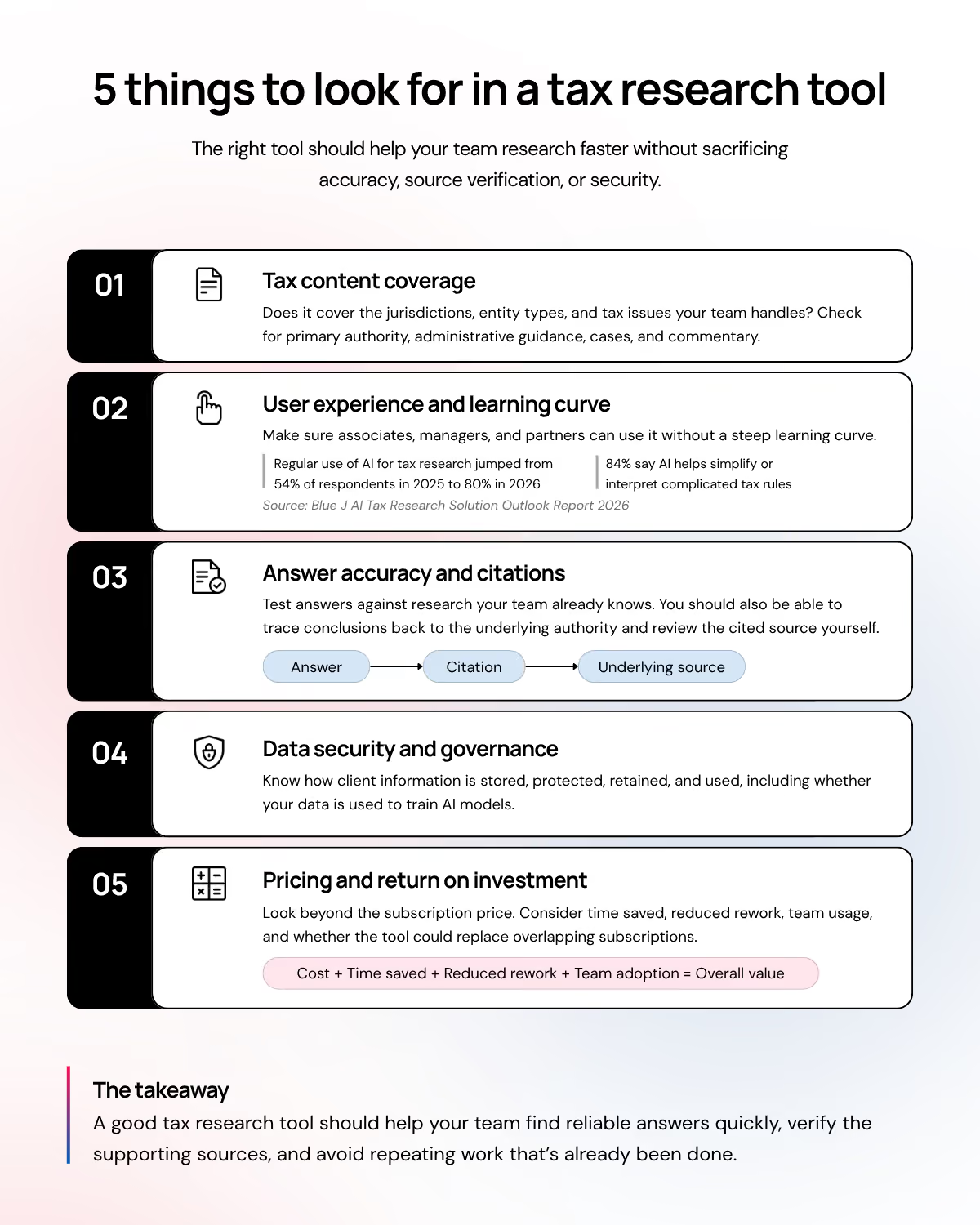
The right tax research tool should help you get accurate, defensible tax answers quickly and consistently across your team. Here are some factors to consider when picking your next tax research tool and website.
Tax content coverage
Make sure the tool or website covers the jurisdictions, entity types, and tax issues your team regularly works with. It should also give you access to the primary authority, administrative guidance, cases, and commentary needed to research your tax issues thoroughly.
User experience and learning curve
Think about whether associates, managers, and partners can use the tool or website without having a hard time. For instance, legacy tax research tools are known to be difficult to use and very time-consuming. Data from Blue J's 2026 AI Tax Research Solution Outlook Report shows respondents who regularly use AI increased from 54% (2025) to 80% (2026). The shift is mainly due to how easy it is to use AI-powered tax research tools compared to legacy ones.
Answer accuracy and citation
Test the tool with tax questions your team has already researched and compare its answers with conclusions you know are correct.
A good tax research tool shouldn’t just search the general internet to construct its tax research answers. Instead, it draws from a curated database of tax content. You should also be able to trace its answers back to the authority supporting them and open the cited source yourself. Using a research tool like this makes it easier for managers and partners to review the research without having to redo it from scratch.
Data security and governance
If your team will enter client information or upload documents to a tax research tool, understand how the provider stores, protects, retains, and uses that data. Check the tool's security controls and whether your information is used to train its AI models.
Pricing and return on investment
Price is important, but it shouldn’t be the only thing you look at. For example, a more expensive tool could still be worth it if your team uses it often, saves hours on research and review, or lets you cut other overlapping subscriptions.
Streamline your tax research together with Blue J
Tax research can eat up hours when your team has to jump between databases, search through lengthy source material, piece together an answer manually, and confirm the authority that supports your conclusion. That can mean more time spent double-checking sources, reworking research, and drafting explanations for clients.
That’s the problem Blue J is built to solve.
Just ask Blue J your tax question in plain language and get instant, defensible answers grounded in curated, authoritative tax content. The answers you receive include citations you can review to verify the authority behind the conclusion yourself. You can also turn completed research into client-facing emails and memos without starting over in another tool.
That gives you more time to focus on the judgment, review, and client work where your expertise really matters.
Frequently asked questions about tax research websites and online tools
What’s the difference between a tax research platform and a tax research website?
A tax research website typically gives you access to a specific type of content, such as legislation, court decisions, or commentary. A research platform brings multiple sources and tools together, often adding search, AI, comparison, drafting, or other features to support the broader research workflow.
Do I still need a subscription library if I use an AI-powered research tool?
You may still need a subscription library if your AI tool doesn’t include the tax sources your team relies on. Before replacing your subscription library with an AI tool, check that the AI tool gives you access to the same primary authority, expert commentary, and specialist content.
How do I check whether an AI-generated tax answer is accurate?
When evaluating AI tax research tools, check the citations to the reply you get, open the underlying sources, and confirm that they actually support the conclusion. You can also test the platform with questions your team has already researched and compare the results.
Which tax research tool covers international or cross-border issues?
Tax research tools like Blue J support cross-border research by incorporating content from IBFD and the OECD. IBFD is an independent nonprofit specializing in international tax research, while the OECD develops international tax standards and guidance used by governments worldwide. These resources give you more context when researching tax issues across 220+ jurisdictions, from tax treaties and transfer pricing to permanent establishments and other cross-border matters.
Can these tools help with state and local tax research, not just federal?
Yes, but state and local tax (SALT) coverage varies by tool. For instance, Blue J covers all 50 states using federal, state, and local government sources and can compare tax requirements across states.

Stay up to date